No curing wait
Piles carry load once installed and checked, so the racking crew can start right after.
Solar Foundations
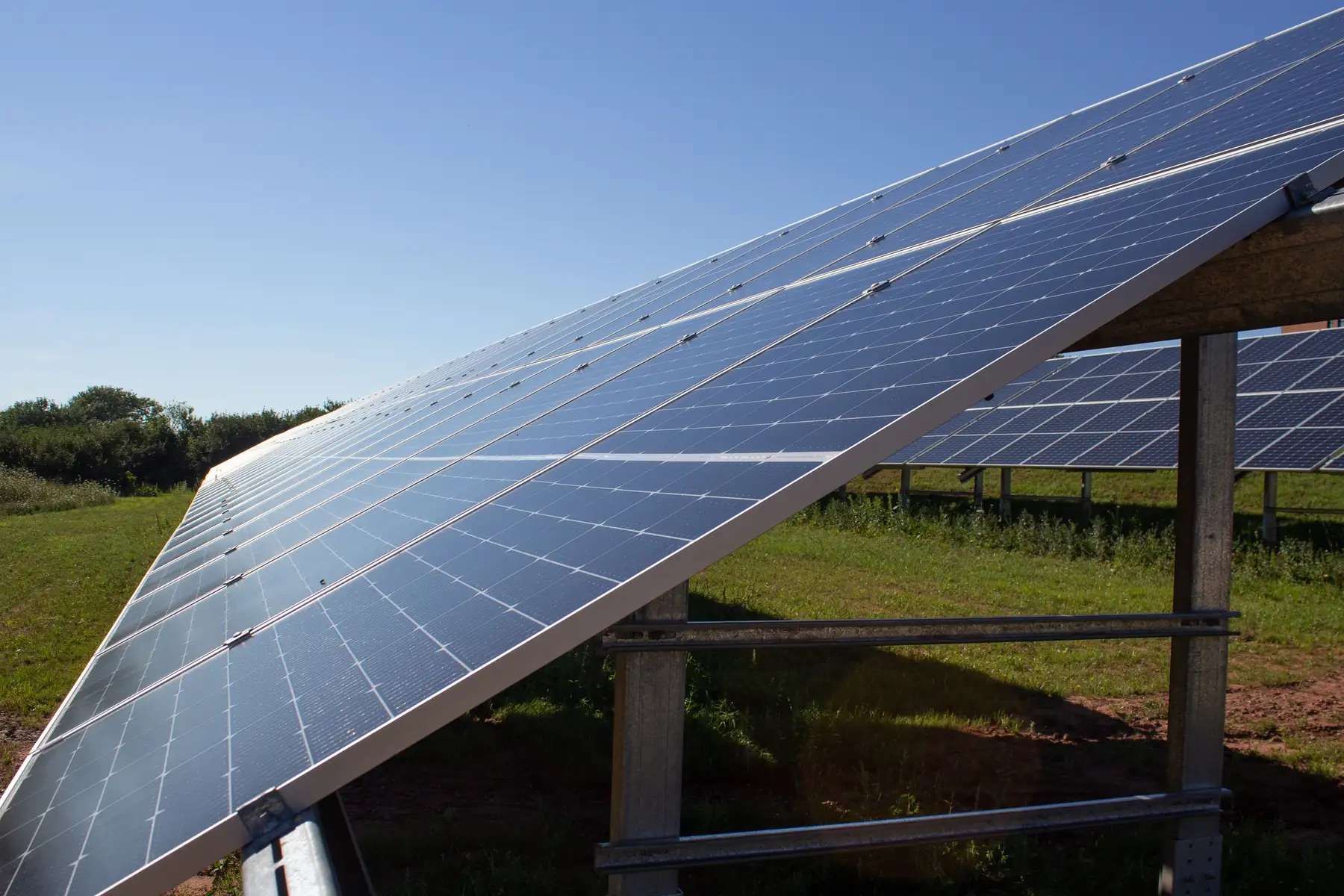
Engineered screw piles for ground-mounted solar arrays on homes, acreages, farms and business properties across Burlington, Oakville, Milton and Halton Hills. Every pile is torque-checked as it goes in, and the racking crew can start without waiting on concrete.
What we install
Solar panels are not heavy, but a row of them acts like a sail. Wind pushes on the face and pulls up on the back, so a ground-mount foundation has to hold against uplift and sideways force as well as weight. It also has to stay at the same height through every freeze and thaw, or the rows drift out of line and the racking twists.
Postech Halton installs engineered steel screw piles at each racking post position. The pile is rotated in with compact hydraulic equipment until it reaches the depth and installation torque the design calls for, and that torque is written down for every pile. Pile type, spacing and depth follow the racking manufacturer's requirements, the array layout, the soil and the approved design.
Piles carry load once installed and checked, so the racking crew can start right after.
Installation torque is logged at each post and handed over for the engineer and inspector.
Helical plates lock into the soil, giving the array resistance to wind uplift as well as bearing.
Piles reach stable soil below frost-affected ground, so rows stay level winter after winter.
No footing holes to dig, no spoil to truck away and no concrete truck across the lawn or field.
Installation does not depend on concrete weather, so the array does not have to wait for spring.
Why screw piles for solar
On a ground-mount job, digging, forming, pouring and curing footings is the slow part. Screw piles remove those steps, so the rest of the schedule can hold.
Nothing to dig, form or cure. The racking and electrical crews can be booked against the pile date, not the weather.
No open holes filling with water and no spoil piles to remove, which are the usual sources of extra foundation cost.
A compact machine works in a small footprint. Farmland can be worked right up to the array and lawns are not left with large holes to backfill.
Every pile has a torque reading taken on the day it is installed. A poured footing gives no comparable reading on site.
How a solar job runs
We work from the same layout as you or your solar installer, so every pile lands on a racking post position.
Send the array layout, racking make and model, site photos, access notes and the date you are aiming for.
Pile type, depth and spacing are matched to the racking requirements, the loads and the site.
Each pile goes in at its marked position, with torque recorded as it is installed.
You get the installation records and the site is ready for racking, with no curing delay.
Early planning guide
This is a starting point for the first conversation, not a pile schedule. Final pile count, size and depth come from the racking design and the site itself.
| Project factor | Early planning consideration | Why it changes the foundation |
|---|---|---|
| Number and length of rows | Pile count follows the racking post spacing along each row. | Every extra row adds a line of support points to lay out and install. |
| Panel height and tilt | Taller, steeper arrays generally need more capacity per post. | Height and tilt increase the wind and uplift load each pile has to resist. |
| Racking system | The manufacturer's foundation requirements set post locations and tolerances. | Pile caps and connections must line up with the racking posts. |
| Clay, wet ground or slope | Soft or wet clay and sloped sites may need deeper piles or larger helices. | Bearing and pull-out resistance depend on the soil the plates reach. |
| Site access | Compact equipment can reach backyards, fenced lots and open fields. | Access affects equipment and scheduling rather than the foundation design. |
For solar installers & electricians
Hire Postech Halton for the piles and keep your own team on racking, panels and wiring. Send the array layout, racking specification, site photos and target date, and we will come back with a project-specific quote.
If you install arrays across Halton regularly, we can plan pile dates around your crews and supply the installation records your engineer and inspector ask for on each job.
Send us your next array →Trade-ready support
Solar foundations in Halton Region
A concrete ground mount means a hole at every post, spoil to haul away, forms, a pour and then days of curing before the racking goes on. On a rural Milton or Halton Hills property that often means trucks crossing a field; in a Burlington or Oakville backyard it means torn-up lawn. Screw piles are installed with compact equipment, displace very little soil and carry load as soon as they are in and checked.
Much of Halton sits on clay that swells, shrinks and heaves with the seasons, and open rural sites take the full force of the wind. A properly designed screw pile reaches past frost-affected soil to stable bearing, and its helical plates resist pull-out as well as downward load. Pile selection, depth and spacing follow the racking design, the array layout, the soil and the approved engineering.
Frequently asked questions
Yes. Screw piles are a common foundation for ground-mount solar because they resist uplift and sideways wind load as well as weight. Pile size, depth and spacing are set to suit the racking system and the site.
It depends on the size of the system, where it sits on the property, how it connects to the grid and which municipality you are in. Check with Burlington, Oakville, Milton or Halton Hills and with your solar installer before work starts. We supply installation records for the permit and inspection file.
Piles are installed past the frost-affected clay to stable bearing, which is what stops them heaving. That keeps the rows level and the racking square from one season to the next.
Cost depends on the number of piles, pile type and depth, the soil, site access and any engineering required. Send the array layout and site details for a project-specific quote.
Explore more
Get in touch
Your local Postech team for solar, foundation, excavation, slab, and deck projects across Burlington, Oakville, Milton, Halton Hills, and surrounding communities.